Our office has moved to 5575 Warren Parkway, Suite 116, Frisco, TX 75034, effective September 11. Please plan accordingly for upcoming appointments.

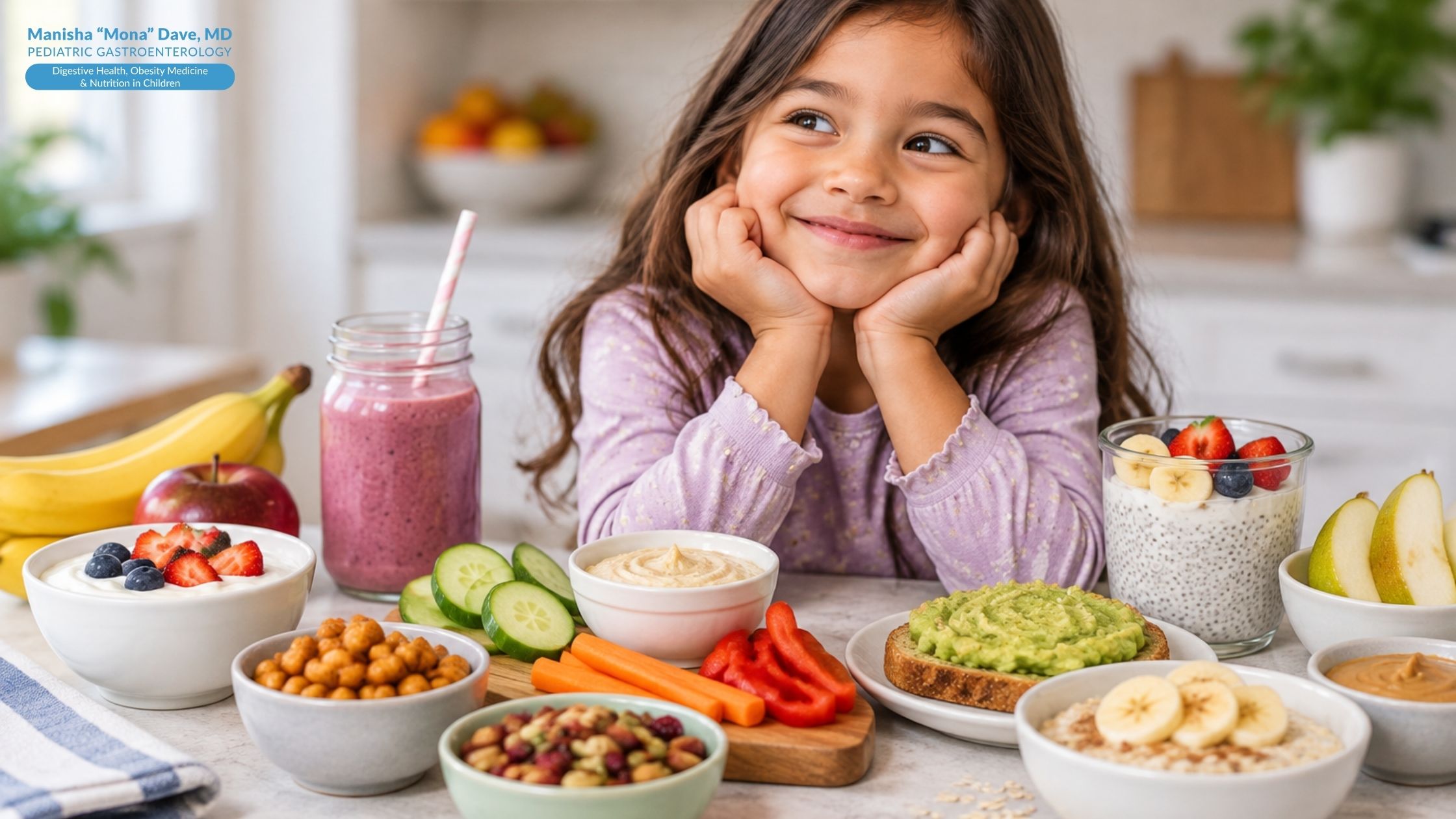
Getting a child to eat a snack that actually supports digestion, not just fills the gap before dinner, can feel like a small daily win. Between school pickup, practice, and homework, there is rarely time for anything complicated.
Gut-friendly snacks do not have to be fancy or hard to find. These ten ideas use familiar whole foods that work for real school days, after-school hunger, road trips, and busy weeknights.
A few qualities show up again and again in snacks that support digestion:
Children do not need specialty "gut health" products to support digestion. Familiar whole foods can do that job well on their own.
Plain yogurt with live and active cultures pairs well with strawberries, blueberries, or raspberries for added fiber. Choose unsweetened or lower-added-sugar options when possible, since some flavored yogurts add more sugar than a snack really needs.
Apples provide fiber, including a type called pectin, while nut butter adds protein and healthy fats that help the snack feel more filling. For children with nut allergies, sunflower seed butter or a thin layer of hummus works as a safer alternative.
Bananas and oats each provide a different type of fiber, making this an easy option for breakfast, after school, or a portable snack in the car. Top with fresh fruit rather than heavily sweetened toppings.
Chickpea-based hummus provides fiber and plant-based protein, and pairing it with a few different vegetables adds variety. Cut vegetables to an age-appropriate size to reduce the risk of choking, especially for younger children.
Whole grains provide fiber that refined white bread does not, and avocado adds more fiber along with unsaturated fats. This works as a simple, savory alternative to packaged snack foods.
Pears are naturally fiber-rich, and pairing them with yogurt makes for a more filling snack between meals. Keep the portion practical, since more fiber all at once is not automatically better.
A simple mix of whole-grain cereal, unsweetened dried fruit, pumpkin or sunflower seeds, and nuts when age-appropriate and safe travels well for school or activities. Choose versions with minimal added sugar and adjust ingredients based on a child's age and any known allergies.
Roasted chickpeas provide fiber and plant-based protein and can be prepared ahead of time for older children and teens to grab on their own. Keep seasoning simple, since heavily salted packaged versions are not really an equivalent.
Chia seeds are a concentrated source of fiber and pair well with berries, banana, or peaches. Introduce high-fiber foods like this gradually, along with enough fluids, particularly for children who do not usually eat much fiber, since a sudden increase can cause digestive discomfort.
A smoothie made with banana or berries, a handful of spinach, plain yogurt or a suitable alternative, and milk or another liquid keeps the whole fruit intact rather than relying on juice. Keeping the fruit whole helps retain more of its natural fiber.
A few habits can take the daily pressure off:
More fiber is not always better, especially all at once. Increasing fiber too quickly can contribute to gas, bloating, or abdominal pain in some children, and individual digestive conditions can also affect which foods are well tolerated.
Rather than continually eliminating foods on their own, parents should pay attention to persistent constipation, diarrhea, bloating, or changes in bowel habits and bring those patterns to a doctor's attention.
Consider an evaluation when digestive symptoms:
Gut-friendly snacks do not have to be complicated. Variety, fiber-rich whole foods, and minimally processed ingredients form a solid foundation without turning snack time into a project. Introduce new foods gradually and lean on options your family can realistically stick with.
What a child eats between meals adds up over time, shaping digestion, energy, and how comfortable they feel day to day. When snack choices are not working, the signs often show up as recurring stomach pain, bloating, or unpredictable bathroom habits rather than one obvious cause.
If those patterns sound familiar, the next step is not more trial and error at home, it's a proper evaluation. Dr. Mona Dave, a pediatric gastroenterologist in Frisco, TX, offers nutrition counseling to help identify what's behind your child's digestive symptoms and build an eating plan that actually fits their needs. Schedule a visit to get started.