
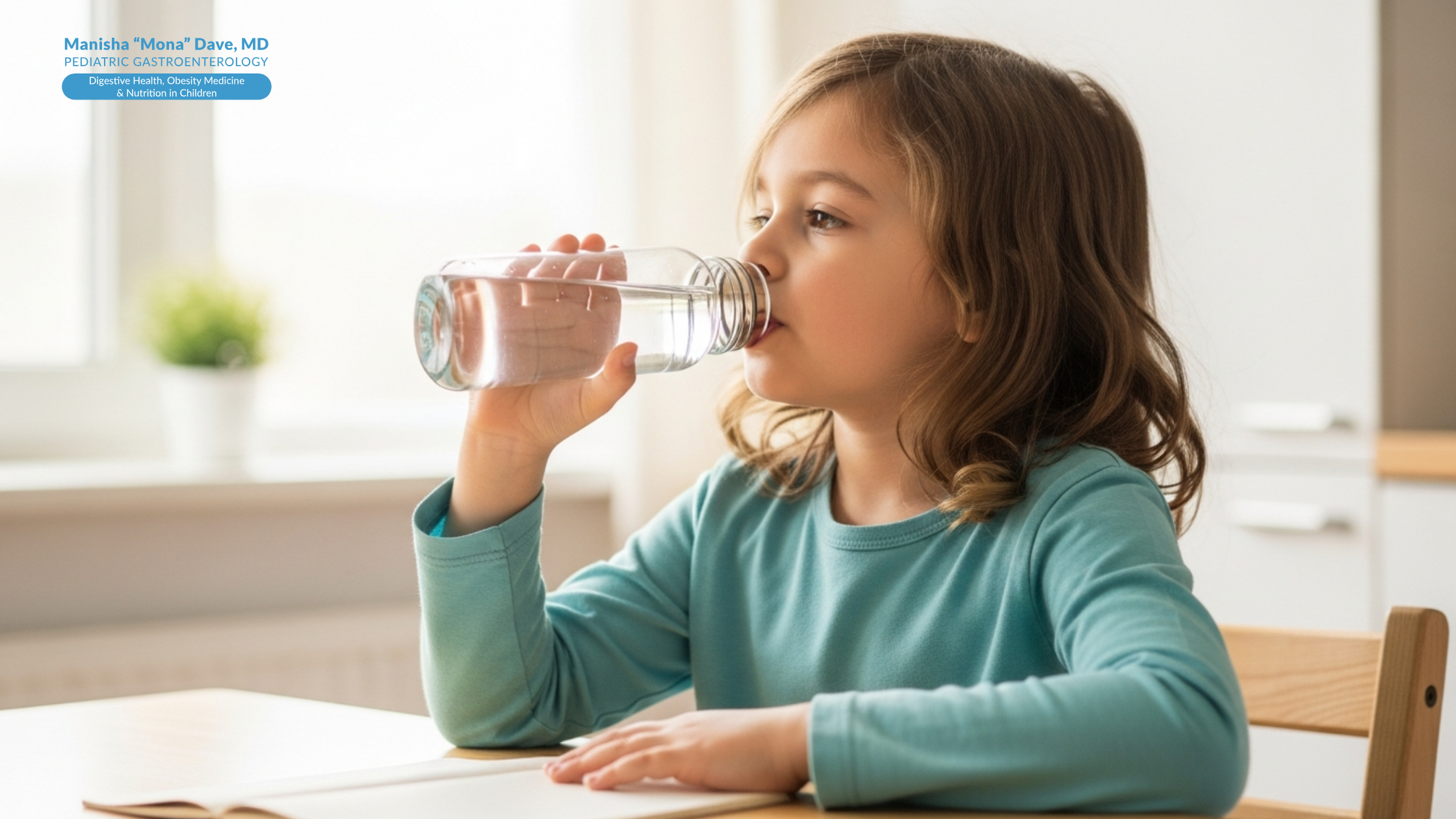
Many parents notice digestive issues in their children, like constipation, frequent tummy aches, or a lack of appetite, and often wonder what might be causing it. While food choices usually take center stage, hydration is just as important for keeping a child’s digestive system working well. So, how does drinking water help digestion? Water supports the breakdown of food, keeps bowel movements regular, and helps maintain a healthy gut environment.
Children’s bodies are constantly growing, which makes proper hydration essential for day-to-day comfort and digestion. Compared to adults, kids lose fluids more quickly, especially during active play or in warm weather. Running, sports, and outdoor activities increase water needs, yet many children do not recognize thirst early.
Because of this, mild dehydration can happen without obvious warning signs. Early symptoms may include fatigue, headaches, irritability, or difficulty concentrating. Over time, even mild dehydration can begin to affect digestion, appetite, and bowel habits.
Water plays an important role at every stage of the digestive process, starting from the very first bite.
Drinking enough water helps the body produce saliva, which begins breaking down food in the mouth. It also supports digestive enzymes in the stomach and intestines, allowing food to be processed more efficiently. Adequate hydration makes swallowing easier and helps digestion move along smoothly.
This is a key reason how drinking water helps digestion goes beyond simply preventing thirst. Without enough water, digestion can slow down and lead to discomfort.
As food moves from the stomach into the intestines, water helps keep digestion flowing at a steady pace. Proper hydration allows food to pass smoothly through the digestive tract, reducing bloating, cramping, and feelings of heaviness after meals.
When children do not drink enough water, digestion can become sluggish. This may contribute to stomach pain or feeling full after eating small amounts.
Hydration also plays an important role in supporting good gut health. A well-hydrated digestive system helps maintain a healthy balance of gut bacteria, which is essential for digestion and overall wellness.
Water supports nutrient absorption and helps maintain a stable environment in the intestines. Over time, this contributes to better digestion, improved energy levels, healthy growth, and immune support.
Constipation is one of the most common digestive concerns in children, and hydration is often a major factor. Water helps soften stool, making bowel movements easier and more comfortable.
When water intake is low, stools can become hard and dry, making them difficult to pass. There is a strong connection between hydration and bowel movements, and regular water intake helps support consistency and digestive comfort.
Some signs of low hydration can be easy to miss but are important to notice early.
Common signs include:
Helping children stay hydrated does not need to feel like a constant battle. Small, consistent habits often work best.
While hydration supports healthy digestion, some digestive concerns may need further evaluation.
Consider speaking with a pediatric provider if your child experiences:
Water plays a foundational role in digestion, gut health, and daily comfort for children. From helping break down food to supporting regular bowel movements, proper hydration is one of the simplest ways to support digestive wellness.
If you have concerns about your child’s hydration habits, digestion, or overall gut health, Dr. Mona Dave, a board-certified obesity medicine expert and pediatric gastroenterologist, provides thoughtful, evidence-based care focused on long-term health. Schedule a visit today to support your child’s digestive comfort and healthy growth.